
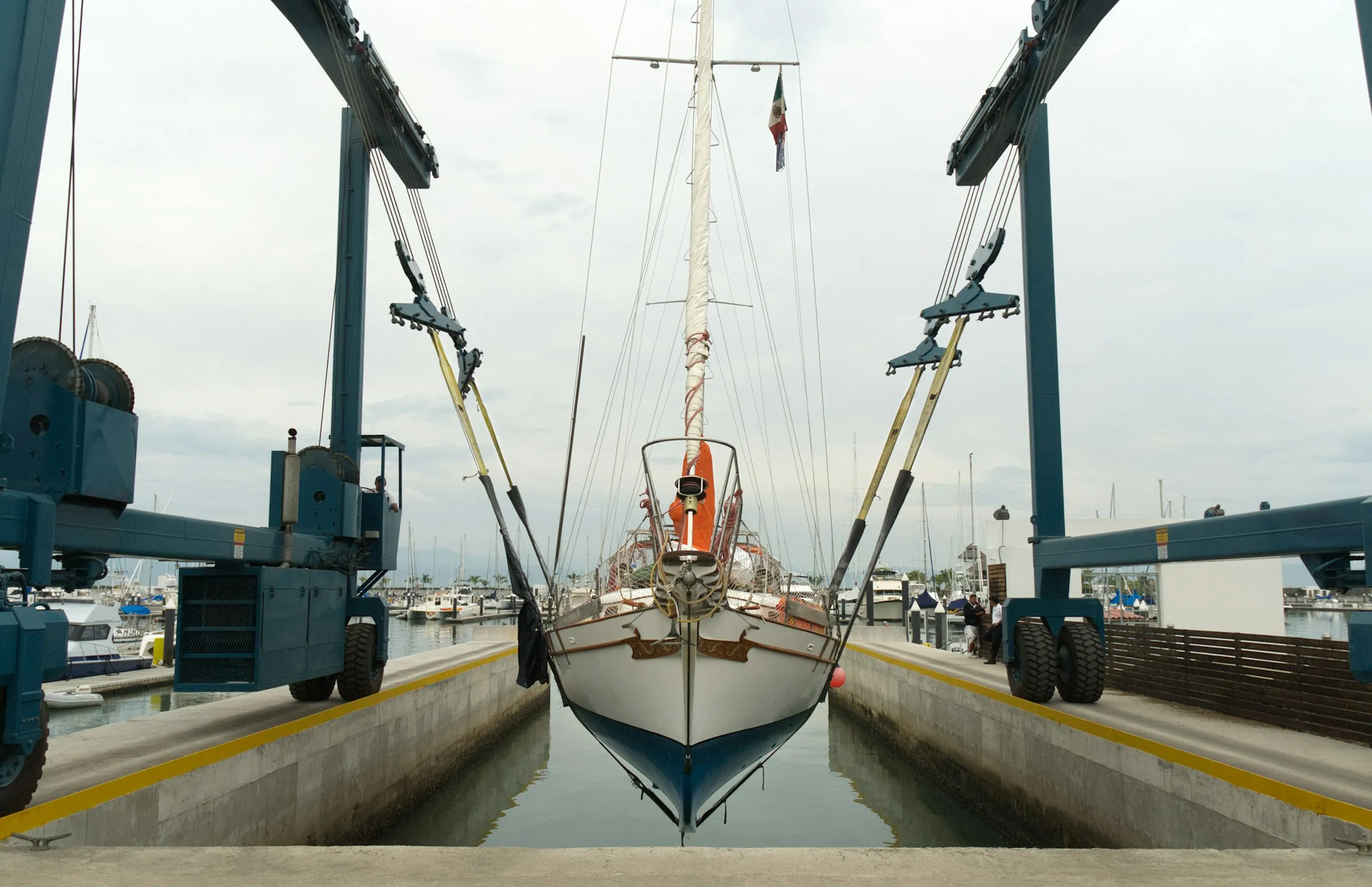
An out of water survey inspects the part of a boat you can't see afloat: the hull below the waterline, the keel, the rudder, the running gear, the through-hulls and the anodes. The boat is lifted out, usually for an hour or less on a pre-purchase survey, and the surveyor works round the bottom with a moisture meter and a sounding hammer.
It's where many of the expensive findings on a used boat turn up, so it's also where a purchase most often stops.
What the surveyor checks
BoatUS lists what the surveyor looks for once the boat is in the slings: water intrusion, delamination and blisters, then the propellers, anodes, thrusters, trim tabs, rudders and struts. Practical Sailor adds the keel, with bolted keels checked from inside as well, and every through-hull.
In practice the walk round the bottom covers:
- The laminate. Blisters, cracks, gelcoat damage and repairs. See osmotic blistering for how blisters are graded.
- Moisture. Readings across the hull bottom on fibreglass and wood. Canadian Boating lists moisture readings for fibreglass and wood, and ultrasonic thickness tests for aluminium and steel.
- Sounding. Tapping the hull and rudder to find voids and delamination. Practical Sailor says the hull is inspected, sounded and tested for moisture.
- The keel and its joint. The keel-to-hull joint, signs of a grounding, and the keel bolts from inside. See keel smile and grounding damage.
- The rudder. Play in the bearings, cracks and water in the blade. See rudder bearing wear and water in the rudder.
- Running gear. Propeller, shaft, cutless bearing and P-bracket, or the saildrive and its seal.
- Through-hulls and anodes. Every fitting below the waterline, and how much of each anode is left.
Readings that mean something
A moisture meter reads relative to the laminate it's on. Take reference readings on an area that should be dry, such as the topsides, note how long the boat had been out of the water, and report the meter and scale you used. The moisture readings log sets this out reading by reading.
Big findings first
BoatUS notes that a surveyor usually checks for the big-ticket problems first, such as water intrusion. If one turns up that the buyer won't take on, the surveyor may offer to stop before the rest of the survey and the haul-out are paid for. That's worth agreeing with the buyer before the day.
When an insurer asks for one
Insurers set their own rules. Practical Sailor says some accept an in-water survey and others require a complete haul-out. RACV's own requirements name the out of water survey and valuation report and set how recent it must be: within 5 years for a fibreglass boat over 10 years old, and within 3 years for other hulls over 10 years old. See insurer survey rules for more insurers side by side.
Write it up while the boat is ashore
The owner has already paid for the haul-out. A B item that's cheap to fix while the boat is out, an anode or a cutless bearing, is worth saying so in the recommendation, because the next lift costs them again.
The out of water survey report template gives the sections and example findings in Word. With Axsail you dictate each finding as you walk round the bottom, the photo goes on the finding, and the phone asks for any reading you didn't give.