
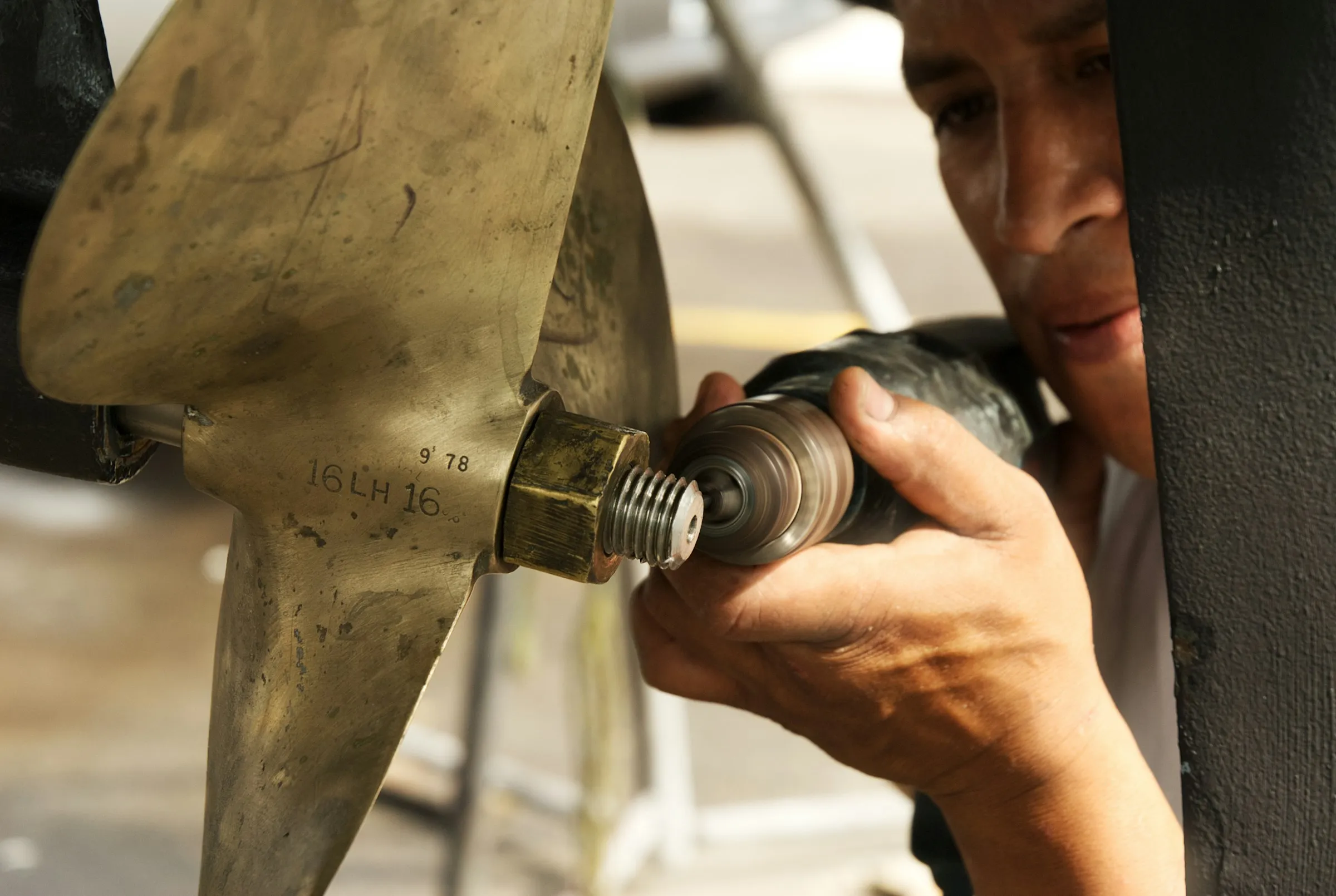
A damage survey answers what an incident did to a boat. ABYC describes it as determining the nature, cause and extent of damage when something goes wrong. The surveyor inspects the boat after a collision, grounding, strike or sinking, and writes up what's damaged, the probable cause, how it should be repaired and what that should cost.
Insurers settle claims from the report, yards price the repair from it, and lawyers read it when a claim is disputed.
How a claim usually runs
Moran Yacht & Ship sets out the usual order:
- The incident happens and the owner tells the insurer.
- The insurer assigns or approves a surveyor, who inspects the boat.
- The insurer reviews the report and evaluates the claim.
- Repairs are authorised.
Moran notes that most insurers require a formal damage survey before they process a claim.
Whose surveyor is it?
Surveyors are expected to be impartial: ABYC says that's the nature of their industry standards. But the one the underwriter sends works on the insurer's instructions. Southern Boating puts it plainly: the surveyor assigned by the underwriter represents the insurance company's interest.
Owners can hire their own. Southern Boating says owners have the right to bring a surveyor to inspect the damage and recommend repair methods and costs, and that underwriters may pay for that surveyor, subject to the deductible and the validity of the claim.
What the report contains
Moran lists what a damage report should include:
- A description of the vessel and its condition at the inspection.
- An account of the incident and its probable cause.
- Photos of all the damage.
- Repair recommendations and estimated repair costs.
- An opinion on whether the boat is seaworthy or should stay out of service.
Southern Boating's list matches: recommended repairs, estimated repair cost and probable cause.
Keep the account and the findings apart
The report is easiest to use when the owner's account, what you found, what you think caused it and older defects stay separate. An adjuster can then settle from the report without calling you back, and older wear isn't mixed into the claim. Common examples are grounding damage, lightning strike damage and propeller damage.
Photograph the damage before anything is moved or opened, and again at each stage the yard opens up, with a scale in the frame for cracks.
What it costs
Damage work is usually billed by the hour. Wilson Yacht Survey in Florida lists $150 an hour for damage, investigation and consultation work, and $350 an hour for depositions and expert testimony.
The damage survey report template follows the order most adjusters expect, in Word. With Axsail you dictate the damage as you find it, and each photo is placed on its finding with the time it was taken.