
Axsail
GUIDE · BUYING A BOAT IN EUROPE

Buying a used boat in Germany: the IBS, the ship register, VAT proof and the contract

UPDATED 12 NOVEMBER 2026 · 3 MIN READ

What to check when buying a used boat in Germany: what the Internationaler Bootsschein and the ship register prove, the Flaggenzertifikat, inland waterway numbers, VAT proof, warranty rules for private and dealer sales, and the survey.

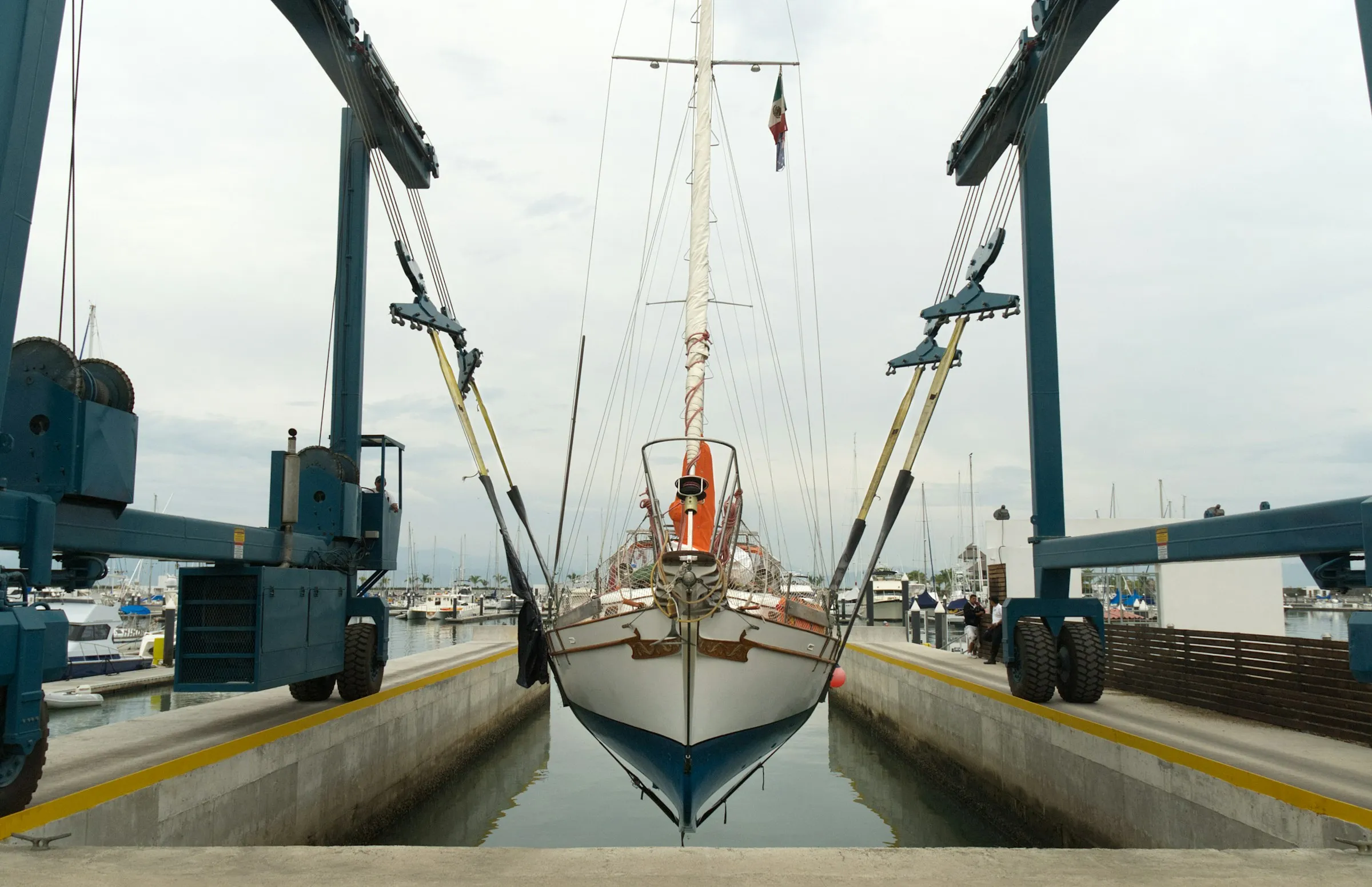
A yacht lifted out of the water in a boatyard travel lift

Many pleasure boats in Germany aren't in any register, so a buyer has to piece together ownership from other papers. The contract does the rest of the work, which makes it worth getting right.

Proof of ownership

YACHT's contract guide says the best case is a boat in a German ship register, which works much like the land register. But since many cruising boats in Germany aren't registered, other documents often have to serve as proof.

  • Seeschiffsregister. YACHT says boats over 15 m hull length must be entered, private or commercial, at one of the registers held by 17 local courts, and receive a Schiffszertifikat that also proves ownership. Smaller yachts can be entered voluntarily. Entry needs a Schiffsmessbrief from the BSH.
  • Internationaler Bootsschein (IBS). Issued by the German Sailing Association (DSV), the German Motor Yacht Association (DMYV) or the ADAC, and renewed every two years. YACHT calls it officially recognised across Europe as proof of ownership, though no authority issues it. Its contract guide is more cautious: such documents give clues but don't replace a register entry. SeaHelp advises checking the seller's name is in the IBS.
  • Flaggenzertifikat. Issued by the BSH for seagoing yachts up to 15 m and valid for eight years. YACHT notes it isn't proof of ownership.
  • The purchase contract or invoice. Where nothing else exists, YACHT says it's the simplest proof to show at an inspection, in the original or a certified copy.

Numbers on inland waters

On federal inland waterways, the Rhine, the Moselle and the Danube, YACHT says pleasure boats must show an identification number: motorboats with more than 3 hp and sailing boats over 5.5 m. The number can come from the IBS, the Flaggenzertifikat or a small craft number from the waterway office (WSA), and the document behind it must be on board. Lake Constance has its own numbers under state law.

VAT proof

SeaHelp says to establish before signing whether VAT on the boat has been paid, and that the previous owner can show it with an invoice listing the VAT. It warns that boats financed by leasing in other EU countries may not have paid VAT in full. YACHT adds that within the EU the proof rarely matters day to day, but customs may ask for it when a boat re-enters the EU.

The contract

YACHT's contract guide sets out the clauses that protect a buyer:

  • Free of third-party rights. The contract must always state that the boat is free of the rights of others. Check the seller's ID, and if several owners are listed, all of them must agree to the sale. SeaHelp adds co-owners, heirs, banks and leasing companies to the list to check.
  • Transfer date. Ownership normally passes on handover, and damage usually becomes the buyer's risk only from then, so put the date in writing.
  • Warranty. The statutory warranty runs two years from handover. A private seller can exclude it, but only in writing in the contract. A dealer can cut it to one year on a used boat but can't exclude it entirely, and bears the burden of proof for the first 12 months.
  • Handover protocol. Tick off the equipment list item by item and record the handover of the ship's papers, the VAT proof, manuals and keys, signed by both sides.

For large sums, SeaHelp suggests securing the payment with a bank guarantee or an escrow, with a lawyer as escrow agent for very large amounts.

The survey

With the warranty usually excluded in a private sale, YACHT advises bringing an expert or commissioning a full survey (Gutachten). SeaHelp recommends having the boat lifted to check for underwater damage and osmosis, checking that every change of owner is documented, and taking a long trial sail. See the pre-purchase yacht survey and the out of water survey. For German insurers' rig rules, see Pantaenius Germany.

Frequently asked

Do boats in Germany have to be registered?

Boats over 15 m hull length must be entered in the Seeschiffsregister, YACHT says, private or commercial. Smaller boats can be entered voluntarily, and many aren't, so a buyer often relies on other papers as proof of ownership.

Is the Internationaler Bootsschein proof of ownership?

YACHT calls it officially recognised across Europe as proof of ownership, though it isn't issued by an authority. YACHT's contract article adds that such documents give clues but don't replace a legally binding register entry. It's issued by the DSV, the DMYV or the ADAC and renewed every two years.

Can a private seller exclude the warranty?

Yes, but only in writing. YACHT says the two-year statutory warranty applies unless the private seller's contract excludes it. A dealer can shorten it to one year on a used boat but can't exclude it entirely.

When is a licence needed?

YACHT says a Sportbootführerschein, Binnen or See depending on the waters, is needed when the boat has more than 15 hp.

Your full survey report, minutes after the walk-round

Dictate as you inspect. Axsail builds the findings and the report for your signature

Start free

More guides

All guides
BUYING A BOAT IN EUROPE · 2 MIN

Buying a used boat in the Netherlands: Kadaster, the zeebrief, the ICP and VAT proof

What to check when buying a used boat in the Netherlands: what Kadaster registration proves, why the zeebrief lapses on sale, the ICP and ICC, the VAT proof to carry abroad, and the survey.

BUYING A BOAT IN EUROPE · 3 MIN

Buying a used boat in the UK: Part 1 or the SSR, VAT evidence, title and the survey

What to check when buying a used boat in the UK: what Part 1 and the Small Ships Register prove, the VAT evidence HMRC accepts, five years of bills of sale, the RCD paperwork, inland licences and the survey.

BUYING A BOAT IN EUROPE · 2 MIN

Buying a used boat in Croatia: registration, technical inspections and the survey

How buying a second-hand boat or yacht in Croatia works: the harbourmaster for boats and the Croatian Register of Shipping for yachts over 15 m, the documents, the CE rule for boats built before June 2000, periodic inspections, insurance and the pre-purchase survey.

BUYING A BOAT IN EUROPE · 2 MIN

Buying a used boat in France: the certificat d'enregistrement, the annual tax and the survey

How buying a second-hand boat in France works: the certificat d'enregistrement that replaced francisation, who can register a boat, the sale deed, the one-month deadlines, the annual tax on boats over 7 m, and the expert maritime's survey.

BUYING A BOAT IN EUROPE · 2 MIN

Buying or keeping a boat in Greece: TEPAI, the DEKPA, the transit log and the survey

What a buyer needs to know about boats in Greek waters: the TEPAI cruising fee by length and how it's paid, the DEKPA and the transit log, the digital transit log for foreign yachts, the fines, and the survey before you buy.

BUYING A BOAT IN EUROPE · 2 MIN

Buying a used boat in Italy: registration, the notary, the safety certificate and the survey

How buying a second-hand boat in Italy works: the boat categories by length and which must be registered, the authenticated bill of sale, the documents and the STED counter, the safety certificate renewed every five years, and the pre-purchase survey.