
Axsail
GUIDE · BUYING A BOAT IN EUROPE

Buying a used boat in France: the certificat d'enregistrement, the annual tax and the survey

UPDATED 10 NOVEMBER 2026 · 2 MIN READ

How buying a second-hand boat in France works: the certificat d'enregistrement that replaced francisation, who can register a boat, the sale deed, the one-month deadlines, the annual tax on boats over 7 m, and the expert maritime's survey.

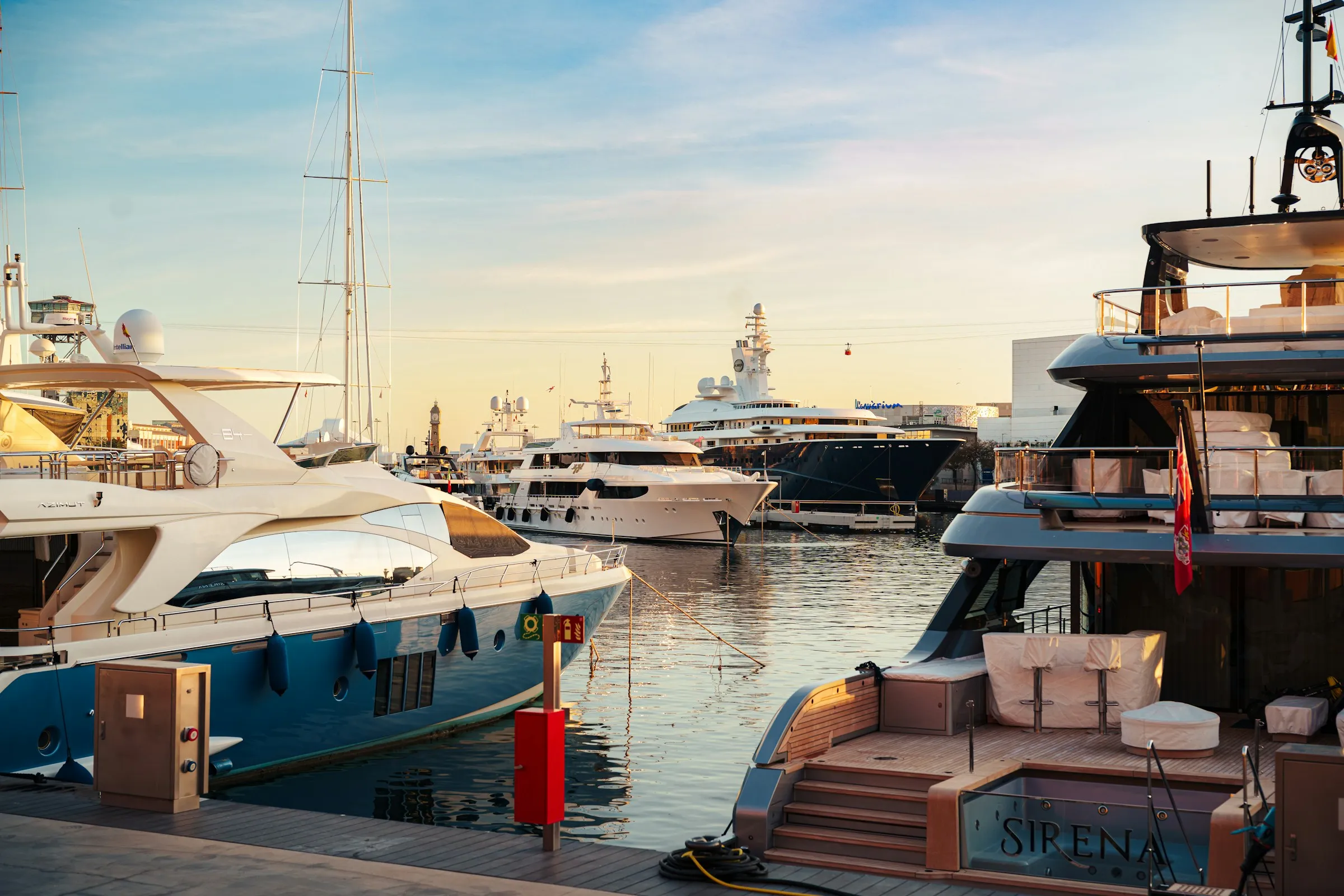
Motor and sailing yachts berthed in a marina in the evening light

France has simplified its boat paperwork into one document, and most transfers now happen online. The parts a buyer can get wrong are who may register the boat and the annual tax. The part a buyer shouldn't skip is the expert maritime's survey.

One certificate

The Var prefecture's maritime office states that since 1 January 2022 the carte de circulation and the acte de francisation have been replaced by a single document, the certificat d'enregistrement. A change of owner is done on demarches-plaisance.gouv.fr, with a postal route for companies, end-of-lease boats and technical problems with the transfer code. The certificate arrives by email as a signed PDF.

Weblex lists the boats that must be registered: hull length of 7 m or more, under 7 m with an engine of 22 administrative horsepower or more, and personal watercraft of 90 kW or more.

Who can own it

The Var office says the buyer must be a national of an EU or EEA country, with an elected domicile in France. A buyer from elsewhere needs a European co-owner. UK nationals qualify only with a residence permit under the withdrawal agreement.

The sale deed and the deadlines

APRIL Marine's model sale deed, based on service-public.fr, records the boat with its CIN hull number, its engines with serial numbers, the equipment sold with it, the price and payment, and the seller's statement that there are no debts or mortgage on the boat. It also sets out the timing: the seller of a registered boat has one month to inform the customs office, and the buyer then has one month to register the boat.

For the file, the Var office asks for the Fiche Plaisance, a copy of the invoice or sale deed, the previous registration document, ID and proof of address, and the leasing contract if the boat is financed.

The annual tax

Weblex explains that the DAFN is now the taxe annuelle sur les engins maritimes à usage personnel, paid every year before 1 April. Boats under 7 m with small engines are exempt. It's calculated on hull length and engine power, with reductions for older boats. Check when the seller last paid it, and the amount you'll owe.

The expert maritime's survey

For a private boat, the expert maritime's survey is your independent look at its condition. ActuNautique describes the expert maritime's pre-purchase and value surveys as visual and non-destructive: no stripped engine, no cut linings, no drilled hull. Ask the expert to say which areas they couldn't reach, and to estimate the cost of the defects they find. Safety equipment by zone is in Division 240.

More on what's checked in pre-purchase yacht survey, and on becoming an expert in becoming a marine surveyor in France.

Frequently asked

What replaced francisation in France?

Since 1 January 2022, the carte de circulation and the acte de francisation have been replaced by a single document, the certificat d'enregistrement, according to the Var prefecture's maritime office.

Which boats need to be registered in France?

Weblex lists boats with a hull length of 7 m or more, boats under 7 m with an engine of 22 administrative horsepower or more, and personal watercraft of 90 kW or more.

Who can register a boat in France?

The Var maritime office says the buyer must be a national of an EU or EEA country with an elected domicile in France. Otherwise they need a European co-owner.

What is the annual tax on boats in France?

The taxe annuelle sur les engins maritimes à usage personnel, formerly the DAFN. It applies to boats over 7 m, engines over 22 administrative horsepower and personal watercraft over 90 kW, and is worked out from the hull length and engine power.

Your full survey report, minutes after the walk-round

Dictate as you inspect. Axsail builds the findings and the report for your signature

Start free

More guides

All guides
BUYING A BOAT IN EUROPE · 3 MIN

Buying a used boat in Germany: the IBS, the ship register, VAT proof and the contract

What to check when buying a used boat in Germany: what the Internationaler Bootsschein and the ship register prove, the Flaggenzertifikat, inland waterway numbers, VAT proof, warranty rules for private and dealer sales, and the survey.

BUYING A BOAT IN EUROPE · 2 MIN

Buying a used boat in the Netherlands: Kadaster, the zeebrief, the ICP and VAT proof

What to check when buying a used boat in the Netherlands: what Kadaster registration proves, why the zeebrief lapses on sale, the ICP and ICC, the VAT proof to carry abroad, and the survey.

BUYING A BOAT IN EUROPE · 3 MIN

Buying a used boat in the UK: Part 1 or the SSR, VAT evidence, title and the survey

What to check when buying a used boat in the UK: what Part 1 and the Small Ships Register prove, the VAT evidence HMRC accepts, five years of bills of sale, the RCD paperwork, inland licences and the survey.

BUYING A BOAT IN EUROPE · 2 MIN

Buying a used boat in Croatia: registration, technical inspections and the survey

How buying a second-hand boat or yacht in Croatia works: the harbourmaster for boats and the Croatian Register of Shipping for yachts over 15 m, the documents, the CE rule for boats built before June 2000, periodic inspections, insurance and the pre-purchase survey.

BUYING A BOAT IN EUROPE · 2 MIN

Buying or keeping a boat in Greece: TEPAI, the DEKPA, the transit log and the survey

What a buyer needs to know about boats in Greek waters: the TEPAI cruising fee by length and how it's paid, the DEKPA and the transit log, the digital transit log for foreign yachts, the fines, and the survey before you buy.

BUYING A BOAT IN EUROPE · 2 MIN

Buying a used boat in Italy: registration, the notary, the safety certificate and the survey

How buying a second-hand boat in Italy works: the boat categories by length and which must be registered, the authenticated bill of sale, the documents and the STED counter, the safety certificate renewed every five years, and the pre-purchase survey.