
Six months after a purchase, the buyer finds wet core under a cockpit locker. The first thing anyone asks is whether the report said that locker was full and couldn't be seen. The scope and limitations section answers that question, and it only protects anyone if it's specific.
Scope: what you did
The NAMS guidelines for writing yacht survey reports say a clear scope of inspection shows the process the report is based on, and list the questions it should answer:
- Did you clear all the lockers and enter every compartment?
- What tests did you run?
- Which tools did you use on the hull and systems, such as a multimeter or a moisture meter?
- Was the boat afloat, ashore, or both, and was there a sea trial?
A detailed scope, NAMS says, shows the reader the inspection was thorough.
Limitations: what you didn't, and why
NAMS recommends combining the scope with a list of survey limitations. The IIMS Small Craft Code of Practice makes it part of the minimum report: a description of the extent of the limitations and the reason any section or area wasn't inspected.
Write each one as a place and a reason:
| Too general | Specific |
|---|---|
| Not all areas were accessible. | Cockpit lockers port and starboard full of stored gear and not emptied; hull and deck core in these areas not inspected from inside. Recommend inspection once emptied. |
| Rigging not inspected. | Rig inspected from deck level only, with binoculars. Masthead fittings, spreader roots and upper terminals not seen. Recommend an aloft inspection by a rigger. |
Yachting World notes two limits that buyers often miss: a survey generally looks at the rigging from deck level only, and doesn't generally include a gas safety check. Say so where it applies.
When there's too little to call it a survey
NAMS raises a harder case. If the boat is covered, the engines and systems are laid up and the electrical system can't be run, the surveyor has to decide whether the inspection can be called a survey at all. Titling it one, NAMS warns, may hide its shortcomings and in an extreme case could mislead the client.
Agree it before the survey
NAMS says it's best to give the client the scope and expected limitations before the survey, so they know what to expect. ITIC advises surveyors to define the precise extent of the work, and what's excluded, at the very outset, then to make any limitations quite explicit in the report.
Practical Sailor reported a case that shows why. The engagement was verbal, and the buyer only received the report with its liability limitation clause after the verbal report. When the surveyor's defence argued the defect was excluded from the report, it failed, because no written agreement had been made. The buyer was awarded $3,300 in arbitration.
NAMS adds that a surveyor can't disclaim their professional responsibility, and that hold-harmless wording at the end of a report holds little legal weight. Yachting World quotes the RYA's view of the duty: reasonable skill and care in reporting reasonably discoverable faults. See terms of engagement for what to agree up front.
Record it as you go
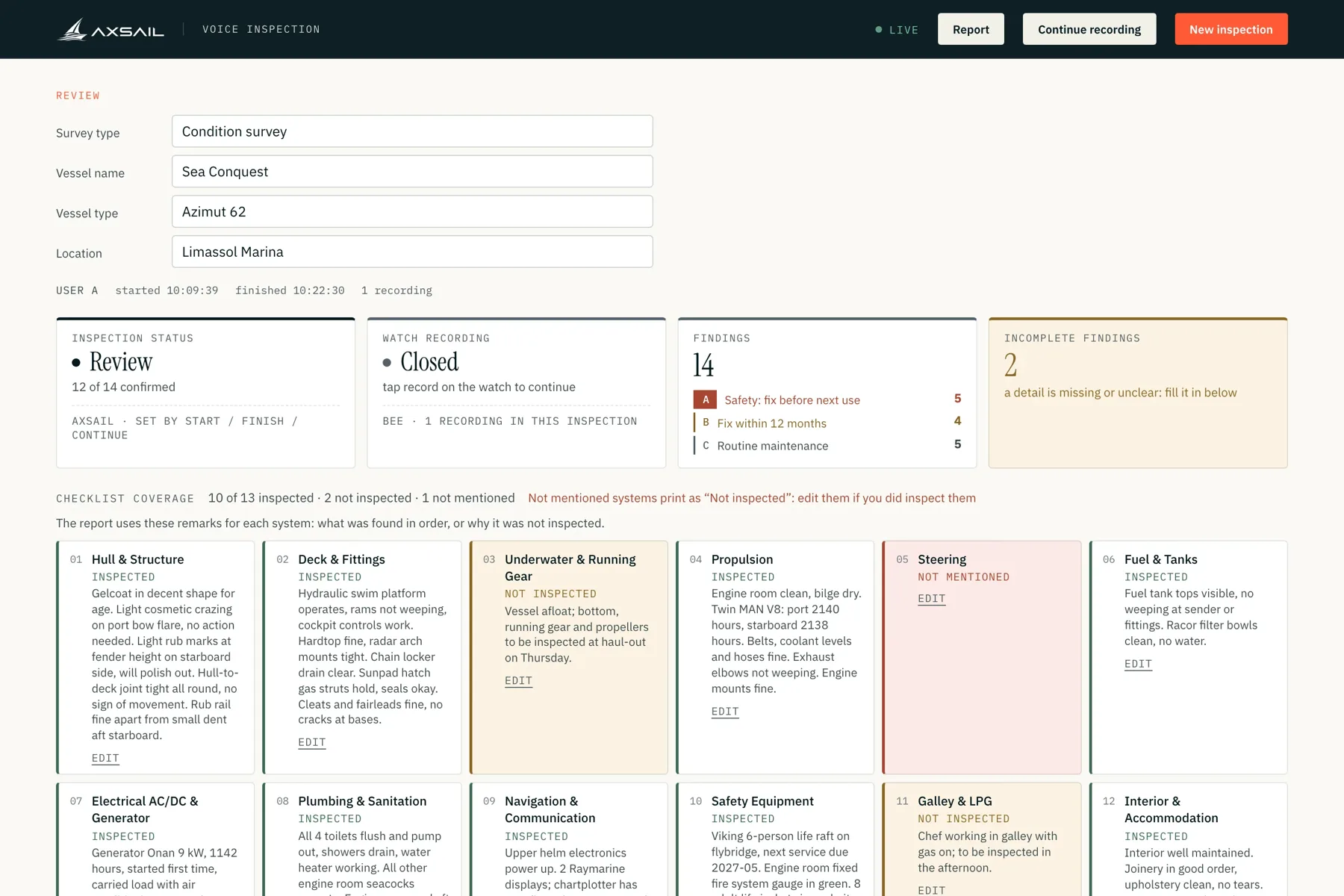
Limitations are easiest to get right on board, the moment you can't open a locker. With Axsail, say "port cockpit locker full, not inspected" and it goes in the report with its reason. Any system you never mentioned is flagged as not inspected before you finalise, so nothing is left out by accident.